Some brands follow the culture. Others come straight out of it. Trapstar helped put British streetwear on the map, building its reputation from out of West London, through limited releases, bold graphics and connections that ran deep into music and fashion.
What started as a few graphic T-shirts shared between friends has grown into an internationally recognised label. Along the way came the now-iconic ‘It's A Secret’ identity, a connection with Roc Nation, collaborations with artists and a following that stretches far beyond the streets where it began.
Now, with Footasylum on board for its next chapter, Trapstar is reaching new heights without leaving its roots behind. This is the story of how it got here.
Trapstar is a British streetwear brand born in West London back in 2005. Founded by Mikey Aryee, Lee Langaigne and Will Thomas, it built its name through limited graphic tees, distinctive branding, music connections and an independent approach to streetwear.
From the beginning, Trapstar had its own way of doing things. The founders weren't looking to follow what everyone else was wearing. They were making apparel that reflected their surroundings, their interests and the culture they were part of.
That approach gave the brand an identity people could recognise. Graphic-heavy designs, statement lettering, heavyweight tracksuits and outerwear became part of its signature look, while limited releases helped build a loyal following.
But Trapstar has always been about more than the clothes. To put it simply, it’s a mindset, a uniform for those who move different, create their own path and never ask for permission. That attitude runs through the brand's history, from its earliest T-shirts to the collections arriving today.
Trapstar was founded in West London in 2005 by three friends: Mikey, Lee and Will. Starting out by creating T-shirts and sharing them locally before building the streetwear label that is recognised around the world today.
The first pieces weren't part of some huge launch campaign. They were designs the founders actually wanted to make and wear themselves. One early T-shirt featured artwork inspired by Scarface, and the responses helped turn what was originally a personal project into something bigger.
The founders built on that interest by keeping releases limited and finding ways to get their designs directly to people. It was a hands-on approach, with orders coming through online networks and pieces being hand delivered personally. No big retail operation, no traditional route into fashion. Just a product people wanted and a name that kept spreading.
Mikey, Lee and Will are three friends from West London, they built the brand together and remain involved in its creative and strategic direction to this day following the partnership with Footasylum.
Each founder has played a part in taking Trapstar from a small independent label to an established streetwear brand. Their shared background and connection to the local scene helped shape a brand that felt genuine to the people wearing it.
That original connection still matters. The founders continue to lead the brand's direction, with the experience and infrastructure around them now giving Trapstar more room to grow.
The name Trapstar comes from an idea shared by co-founder Mikey Aryee: even when people feel trapped by their circumstances, there is a star inside everyone. It reflects the ambition to make something of yourself and create your own opportunities.
The story goes back to a conversation with Lee’s stepfather, who challenged the boys to prove they could make something of themselves. Mikey's response was that there was a star inside everybody, even if they felt trapped. This idea became part of the foundations, speaking to the journey from where you start to where you want to go, not letting your background decide your future.
It's a message that still fits Trapstar today. The brand was built by people who backed their own ideas, took a different route and made a name for themselves on their own terms.
Trapstar grew from a local West London label into an international streetwear name through word of mouth, limited releases, music connections and a strong visual identity. Its unconventional early approach helped build demand before the brand expanded into retail and collaborations.
The early days were all about getting the name out there. Early customers found the brand through friends, online communities and the local scene. Orders were even delivered in pizza boxes, keeping the experience unexpected and adding to the sense that Trapstar was something new that you had to know about to find.
The founders also organised events and pop-ups known as ‘Invasions’, bringing the brand directly to their audience. These weren't just opportunities to sell clothes. They helped build a community around Trapstar and gave people a reason to stay connected to whatever was coming next.
As its following grew, so did the opportunities. Trapstar began reaching audiences outside London, with its clothing appearing across music, fashion and entertainment. But the brand's approach to limited drops and its ‘seen everywhere, found nowhere’ mentality helped it hold onto the exclusivity that made it stand out in the first place.
It's A Secret is one of Trapstar's defining phrases. It reflects the brand's early word-of-mouth approach, limited releases and underground following, where discovering a new drop felt like being let in on something exclusive. The phrase quickly became part of the experience.
In the early days, people weren't finding Trapstar through endless advertising or marketing campaigns. They were hearing about it from friends, spotting the designs in the streets or keeping an eye out for any updates. That feeling of discovery became part of the identity. Even as Trapstar grew, the idea of keeping something back and doing things on its own terms remained important.
It's a simple phrase, but it says a lot about the way the brand operates. Not everything needs spelling out. Sometimes the people who know, just know.
Trapstar developed a close relationship with Jay-Z's Roc Nation and became the first fashion brand signed to the entertainment company. The connection helped raise Trapstar’s international profile. The story began back in 2011, when Roc Nation executives Jay Brown & Ty Ty spotted some Trapstar pieces and became interested. The founders met with them and introduced them to the brand, its designs and the events they had been building in London. The relationship developed from here, eventually bringing Trapstar into the Roc Nation fold.
Music has been part of Trapstar's world since the beginning. Its connections with artists grew naturally from the same West London culture that shaped the brand, helping its clothing become a familiar sight across music videos, live performances and streetwear scenes.
Trapstar's relationship with music has never felt like an add-on. The founders were connected to the artists and communities around them, and the brand grew alongside the sounds and styles coming out of London.
Central Cee is a strong example of that connection. The West London rapper has spoken about wearing Trapstar from his first music video, before his career reached anywhere near the level it has today. He’s also talked about the respect he has for the founders and the brands same local West London roots as him.
Trapstar and Central Cee have since worked together on collaborative projects, bringing his own creative identity into the brand's world. It's a link that reflects how Trapstar has always grown: through genuine relationships with people connected to the culture.
In June 2026, Trapstar embarked upon a strategic partnership with Footasylum. Mikey, Lee and Will remain responsible for the brand's creative and strategic direction, keeping the brand's original vision at the centre of the partnership, while Footasylum provides the retail infrastructure and support to help them reach new audiences.
This was a major moment in Trapstar's journey, but the focus is on what comes next. The partnership brings together the founders' knowledge of the brand, the scene and its culture, with Footasylum's experience across retail. This means more opportunities to grow the product range, develop the footwear offering and reach new customers and lifelong fans through selected stores and online.
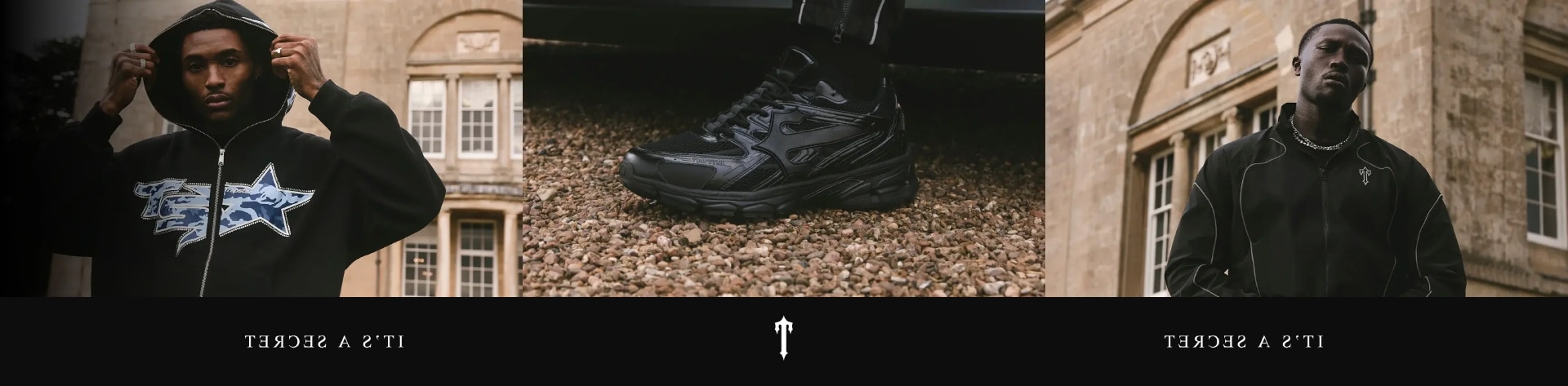
Trapstar's current collections bring together the graphic identity that made them instantly recognisable with a wider range of streetwear staples. Tracksuits, hoodies, jackets, denim and footwear all feature, giving you more ways to build on the original Trapstar original look.
The signature graphics and strong branding are still there, but the range has continued to develop. Tracksuits remain a key part of its identity, while washed finishes, relaxed denim and new footwear silhouettes give the collections more variety.
Trapstar's arrival at Footasylum brings its clothing and footwear to a wider streetwear audience. The range includes signature tracksuits, graphic hoodies, statement outerwear, relaxed denim and the Trispeed 3000, with familiar Trapstar details running throughout.
The Trapstar Star Camo Tracksuit in Black/Blue brings a bolder take on the matching set, using its camo design to give a recognisable streetwear silhouette more impact. For a cleaner look, the Trapstar Foundation Shell Tracksuit in Black keeps things understated, while the grey colourway offers a lighter alternative.
Outerwear has always played a part in Trapstar's identity, and the Trapstar Irongate Jacket in Black brings that statement approach into another everyday layer. Its dark colourway makes it easy to work into a rotation, whether worn over a tracksuit or paired with more relaxed pieces.
Together, our collection shows how Trapstar continues to build on its foundations. The graphics and recognisable branding are still central, but there's more choice and variety across silhouettes, colourways and footwear.
Explore the Trapstar collection at Footasylum to see the latest pieces. For a closer look at the range, the Trapstar Buying Guide covers key styles.
